Marshini Chetty
University of Chicago
Imagine All The People On A Trustworthy Internet
October 8, 2021
Imagine a world where the Internet caters to all types of users and hosts trustworthy content. Right now, this world seems far off for many reasons. For instance, this world would require us to think more broadly of user needs beyond an 'average' tech-savvy adult user - one who is assumed to be always online with a reliable Internet connection. Moreover, this world would require us to host content that is not misleading or manipulative in some way - content that can be evaluated at face value by various users. To
achieve this lofty goal, we first need to deeply understand and catalogue different types of Internet users’ needs and also develop ways to assess and make misleading online content more apparent to end-users. In this talk, I will present a set of case studies from my research lab that helps further the goal of a trustworthy Internet for all. I will describe various projects geared at understanding a wide variety of Internet users’ needs for online privacy and security
in different contexts from children to those in developing contexts. I will also describe work to determine different kinds of misleading content online such as 'dark patterns' and disguised advertisements and show solutions to help users to better evaluate this content. These case studies will demonstrate how important it is to study the privacy and security needs of those who do not fit the “average” user mold and demonstrate possible solutions for helping users gain more trust in information on the Internet. I conclude with open questions for imagining an Internet which is more trustworthy and inclusive to all people.
|
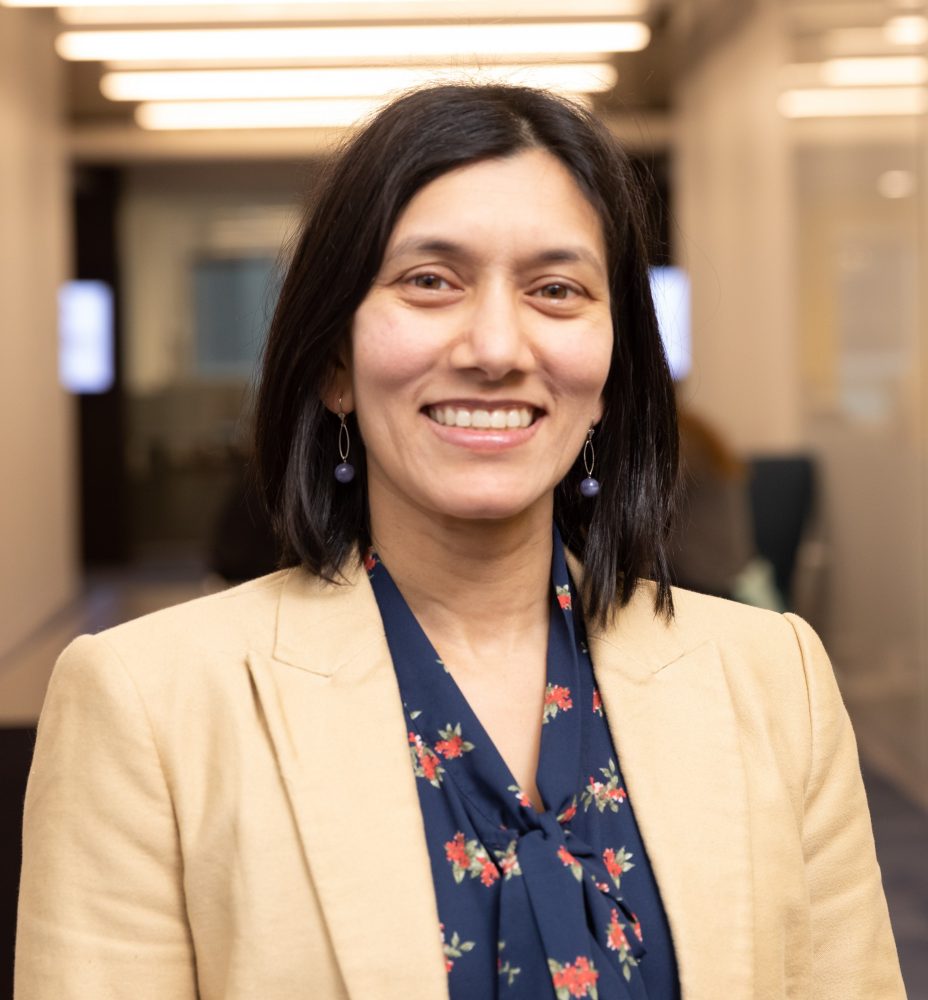
Marshini Chetty is an assistant professor in the Department of Computer Science at the University of Chicago where she directs the Amyoli
Internet Research Laboratory (AIR lab). She specializes in human-computer interaction, usable privacy and security, and ubiquitous computing. Her work has won best paper and honorable mention awards at SOUPS, CHI, and CSCW, and she was a co-recipient of the Annual Privacy Papers for Policymakers award. Her research has been featured in the NYTimes, CNN, Washington Journal, BBC, Chicago Tribune, The Guardian, WIRED, and Slashdot. She has received generous funding from the National Science Foundation, through grants and a CAREER award, as well as the National Security Agency, Facebook, and multiple Google
Faculty Research Awards. |
|