Brad Myers
Carnegie Mellon University
Human-Centered Methods for Improving API Usability
October 27, 2017
Application programming interfaces (APIs) are the user interface
between a body of code and a developer who wants to use it. APIs
include libraries, software development kits (SDKs), toolkits,
frameworks, web services, etc. By adapting a variety of user-centered
methods from human-computer interaction (HCI), we have studied
usability problems both for API users and for API designers. These
studies revealed barriers both at a low level (such as using the
factory pattern in an API) and at a high level (such as the lack of
example code in the documentation). In lab studies, we have shown that
some patterns can slow programmers down by a factor of 10, and in the
field, we have seen problematic APIs block programmers for up to a
week while they waited for an answer from the API designer. A
comparison of 32 different style guides for REST API designs shows
surprising inconsistencies, and interviews with API designers reveal
best practices and barriers to API usability. The implications of our
research can guide the design of APIs, the processes and tools used by
API designers to create those designs, and novel documentation and
tools to help the users of the APIs. Our collaboration with SAP
resulted in significant improvements to their APIs, documentation and
tools, and our new collaboration with Google is revealing
opportunities to help with current practices.
|
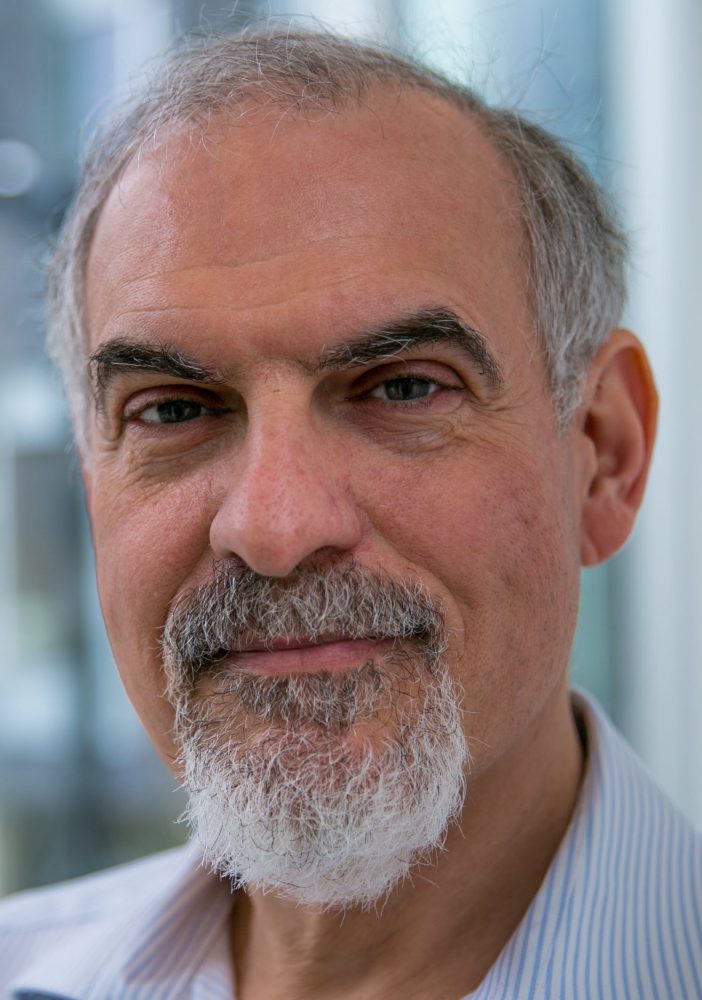
Brad A. Myers is a Professor in the Human-Computer Interaction
Institute in the School of Computer Science at Carnegie Mellon
University. He was chosen to receive the ACM SIGCHI Lifetime
Achievement Award in Research in 2017, for outstanding fundamental and
influential research contributions to the study of human-computer
interaction. He is an IEEE Fellow, ACM Fellow, member of the CHI
Academy, and winner of 12 Best Paper type awards and 4 Most
Influential Paper Awards. He is the author or editor of over 475
publications, including the books "Creating User Interfaces by
Demonstration" and "Languages for Developing User Interfaces," and he
has been on the editorial board of six journals. He has been a
consultant on user interface design and implementation to over 80
companies, and regularly teaches courses on user interface design and
software. Myers received a PhD in computer science at the University
of Toronto. He received the MS and BSc degrees from the Massachusetts
Institute of Technology during which time he was a research intern at
Xerox PARC. From 1980 until 1983, he worked at PERQ Systems
Corporation. His research interests include user interfaces,
programming environments, programming language design, end-user
software engineering (EUSE), API usability, interaction techniques,
programming by example, handheld computers, and visual programming. |
|