Jim Fruchterman
President, The Benetech Initiative
Designing for the Disadvantaged: -- Technology Serving the Rest of Humanity
May 24, 2002
Benetech creates technology tools for the disadvantaged, those
whom the technology industry can't afford to serve. Our users
include people with disabilities, individuals who can't read,
human rights and social justice activists and humanitarian deminers.
Our product design group comes from typical Silicon Valley backgrounds,
and they quickly learn about designing solutions for customers
who simply are not like them.
The saw that technology needs to adapt to people, rather than
the reverse, has deep meaning in serving disadvantaged populations.
The truck driver who has just lost his vision and his job and
the widow in her 80s who has never touched a computer in her
life are simply not interested in becoming computer technology
experts in order to read or maintain their independence. The
human rights activist who has seen friends and family murdered
and daily risks her life to denounce injustice, doesn't have
time or the skills to master Pretty Good Privacy and send secure
emails, so she sends emails in the clear through a military-controlled
ISP and lives with even more risk. Technology tools offer these
communities the power to overcome barriers they face, but only
if the tools are usable. This seminar will discuss the real-world
challenges and needs of some representative groups in using computer
technology to access information for daily living, literacy,
education, employment and justice.
|
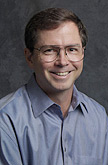
Jim
Fruchterman is the founder and CEO of the Benetech
Initiative, a Palo Alto nonprofit technology developer. His
career path ranges from two degrees at Caltech, brief stints
as a Stanford Ph.D. candidate and private rocket engineer (the
rocket blew up on the launch pad, but Jim says it wasn't his
fault) and founding two successful optical character recognition
companies during the 1980s before becoming a social entrepreneur.
His first nonprofit venture, Arkenstone, became the world's leading
maker of reading machines for the blind before being sold to
a for-profit company in 2000. His current nonprofit venture,
Benetech, is using the proceeds from that sale to launch a handful
of social enterprises, bridging the gap between what's possible
and what's profitable with technology. Examples include Bookshare.org,
a peer-to-peer inspired Web-based digital book library for the
disabled and the Martus Project,
delivering IT tools, cryptography, secure backup and web publishing
to grassroots social justice groups. |
|