Neil Scott
The Archimedes Project, Stanford
Technology and Human Well-being
May 10, 2002
To a large extent, human well-being is largely dependent on
the possession of good health and other resources, which in turn,
correlate positively with access to knowledge and the ability
to earn a livelihood. While the Internet offers unprecedented
opportunities for individuals to augment their knowledge and
to improve job prospects there are many for whom poverty, illiteracy,
disease and problems related to aging throw up seemingly impenetrable
barriers. These problems are global in nature and finding practical
solutions will require global strategies. I will show how the
Archimedes Project is working with local and overseas universities
and organizations to build a global collaboration network in
which researchers in different countries can work together in
virtual project groups to tackle these global access problems.
I will give examples of projects that are underway and discuss
opportunities for participation..
|
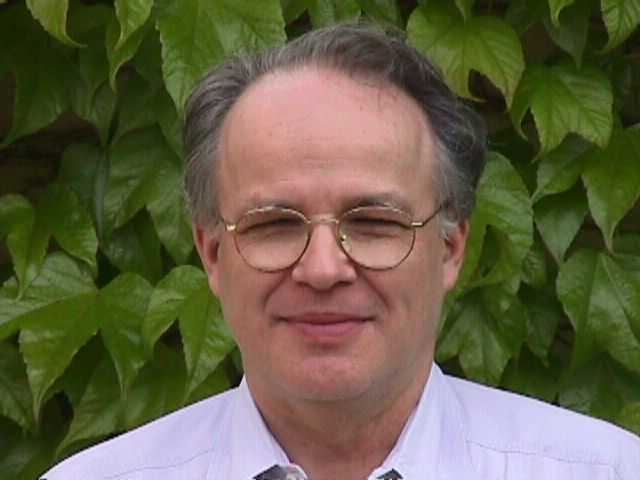
For nearly three decades, Neil
Scott has worked to extend access to computers and information
appliances, including to the elderly and to people with disabilities.
His current efforts include collaborating on the development
of standards for human-centered interfaces to computers and designing
innovative technologies to assist the elderly and people with
disabilities as well asand interfaces for smart houses and appliances
and safer cars. One of his inventions, the Total Access System
(U.S. Patent 6083270), which provides universal access to computer
and other electronic devices through such technologies as speech
recognition, head tracking, and eye tracking; it, was named among
the five top innovations in computer hardware by Discover Magazine
in their( 1997) innovation awards.
Born and educated in New Zealand, he served as Dean of the
School of Physics, Electronics and Electrical Engineering at
Wellington Polytechnic, in Wellington, New Zealand, where he
spearheaded computer design, education, and training and became
involved with adapting technology to serve people with disabilities.
After emigrating to the United States in 1986, for two years
he consulted in disability and subsequently for five years developed
and directed one of the world's first major Computer Access Labs
for students with disabilities at California State University,
Northridge.
Scott's seminal influence on shaping how people will live,
think, work, and play in the new millennium has won him recognition
as a leading futurist (San Francisco Magazine , January 2000).
A reviewer of disability-related grants for the National Science
Foundation, he has served on several White House committees on
access issues. |
|