Kristen Nygaard
University of Oslo
A process-oriented conceptual platform for informatics
October 19, 2001
Object-orientation is now the dominant style in programming,
taught at introductory level in most places. Students complain
that OO is difficult to learn. Kristen Nygaard is of the opinion
that the standard pedagogic in teaching object-oriented programming
is wrong. The reason is that few teachers and text-book authors
understand OO properly. He argues that one must start with "sufficiently
complex examples" instead of "sufficiently simple examples"
in order to teach the pupils the "world view" of object-orientation.
Otherwise they will continue to program as before, albeit in
an object-oriented language.
The lecture is about how object-oriented programming was invented
and is related to other languages and ways of thinking about
programs and processes. It has plenty of anecdotes, most of them
with a bearing on how to understand object-orientation.
|
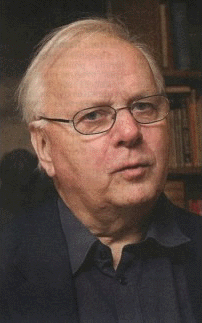
Kristen Nygaard
is Professor at the University of Oslo and a consultant at the
Norwegian Computing Center. He developed, together with Ole-Johan
Dahl, SIMULA I (1961-65) and SIMULA 67 - the first object oriented
programming languages, introducing the concepts upon which all
later object-oriented programming languages are built: Objects,
classes, inheritance, virtual quantities and multi-threaded (quasi-parallel)
program execution. He did research for Norwegian trade unions
on planning, control, and data processing, all evaluated in light
of the objectives of organised labour (1971-1973). Other research
and development work included: the social impact of computer
technology, and the general system description language DELTA
(1973-1975). Since 1976 he has been engaged in the development
and (since 1986) the implementation of the general object oriented
programming language BETA together with Bent Bruun Kristensen,
Ole Lehrmann Madsen and Birger Møller-PedersenThe language
is available on a wide range of computers. His current interests
are directed towards the didactical aspects of the teaching of
introductory programming and system comprehension, and towards
contributions to the creation of a unifying platform for informatics
as a science.
Kristen Nygaard worked at the Norwegian Defense Research Establishment
(1948-60), was Director of Research at the Norwegian Computing
Center (1960-84), professor in Aarhus, Denmark (1975-1976) and
then professor in Oslo (1977-1996). In 1987 he was Visiting Professor
at Stanford University, Palo Alto, USA, Visiting Scientist at
Xerox PARC in Palo Alto and a consultant and lecturer at Apple's
Advanced Technology Group. He is Doctor Honoris Causa at Lund
University, Sweden, and Aalborg University, Denmark. Computer
Professionals for Social Responsibility has awarded him its Norbert
Wiener Prize for "responsibility in social and professional
work". He was awarded Computerworld's honorary prize for
"having made Norway known internationally in the information
technology field", and became - together with Ole-Johan
Dahl - the first to receive the Rosing Prize. He is Commander
of the Order of Saint Olav. He has also been active in Norwegian
politics. He was from the start in 1988 till the victory in the
referendum on 28. November 1994 the chairperson of "Nei
til EU" (No to European Union Membership for Norway), coordinating
the efforts to keep Norway outside the EU, and then the largest
political organisation in Norway. |
|