Don Norman
Nielsen-Norman Group
The life cycle of a technology: Why it is so difficult for large companies to innovate
October 16, 1998
Why is it that good products can fail and inferior products
can succeed? The story is complex: it takes a book to explain
(see The Invisible
Computer). But there are three themes.
One: A successful product must be balanced: marketing, technology,
and user experience all play critical roles, but one cannot dominate
the others.
Two: There is a big difference between infrastructure products,
which I call non-substitutable goods, and traditional products,
substitutable goods. With traditional goods, a company can survive
with a stable, but non-dominant market share. Coke and Pepsi
both survive. Cereals and soaps have multiple brands. With infrastructure
goods, there can be just one. MS-DOS won over the Macintosh OS,
and that was that. MS-DOS transitioned to Windows, and the dominance
continued. VHS tape triumphed over Beta. Most infrastructures
are dictated by the government, which assures agreement to a
single standard. When there is no standard, as in AM stereo or
digital cellular options in the US, there is chaos.
Three: Different factors are important at different stages
in the development of a technology. In the early days, technology
dominates. Who cares if it is easy to use? All that matters is
better, faster, cheaper, more powerful technology. In the middle
stages, marketing dominates. And in t he end, mature stages --
where the technology is a commodity. User experience can dominate,
user experience and marketing. As in soap and cereal. As in watches.
Swatch sells its watches for their emotional appeal, not their
accuracy: accuracy is taken for granted.
The computer industry is now mature. The customers want convenience
and value for their money. They want ease of use, emotional appeal.
But the computer companies are all teenagers, resisting the pressures
to grow up. Too bad. The customer is not well served..
For more discussion see the book, or my essay on The
life cycle of a technology.
|
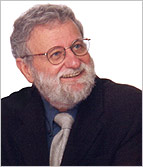
From Don Norman: I'm based
in Silicon Valley, California: my goal is to humanize technology,
in part by making it disappear from sight, replaced by a human-centered,
task-based family of information-appliances. Easy to learn, easy
to use. Easy to understand. But with all the power of enhanced
communication, computational systems. Information appliances,
where the computer disappears into the tool and becomes
invisible. |
|