Peter G. Neumann
SRI International
Risks and Their Prevention: The Role of the Human Interface
February 7, 1997
This talk will consider some of the more serious risks that
have resulted from problems with human-computer interfaces, and
assess the role of the HCI relative to the other risks that must
be considered. There are many cases in the RISKS archives in
which the HCI has been implicated, such as the Aegis shootdown
of the Iranian Airbus, the Stark defense against Iraqi Exocets,
the Discovery laser experiment over Mona Kea, various modern
aircraft accidents, an F-18 missile that was launched while still
clamped to the aircraft, various commercial aircraft and air-traffic-control
problems, train accidents, Three Mile Island, the Therac 25 radiation
device, heart monitors and pacemakers, medical-care systems,
and all sorts of security problems and name or identifier confusions,
to name just a few. A few paradigmatic cases will be considered,
and some recommendations discussed.
|
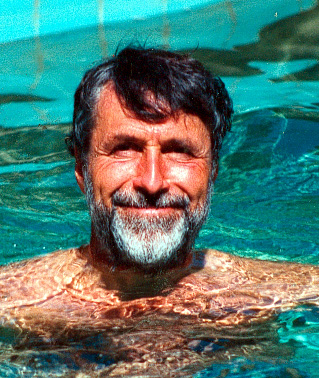
Peter G. Neumann, Principal Scientist in the Computer Science
Lab at SRI International, has been a computer professional since
1953, at Bell Labs in Murray Hill througout the 1960s, at SRI
since 1971, and visiting Mackay Lecturer at both Stanford (1964)
and Berkeley (1970-71). He is a Fellow of the ACM, IEEE, and
AAAS. He moderates the on-line Risks Forum (comp.risks), and
chairs the ACM Committee on Computers and Public Policy. His
book, Computer-Related Risks, is a rich source of knowledge
concerning computer-communication risks and how to avoid them. |
|