David Stork
Ricoh California Research Center (and visiting scholar in Psychology at Stanford)
HAL's Legacy: 2001's Computer as Dream and Reality
January 17, 1997
"I am a HAL 9000 computer production number 3.
I became operational
at the HAL Laboratories in Urbana, Illinois on January 12, 1997..."
--Arthur C. Clarke 2001: A Space Odyssey
(1968 novel)
2001: A Space Odyssey, Stanley Kubrick and Arthur C. Clarke's
1968 epic film about space exploration, extraterrestrials and
the evolution of intelligence, was the most scientifically precise
feature film ever made. Now, on the occasion of HAL's
"birth" (as given in the novel), we can compare
the film's computer science "predictions" with current
technological fact -- in particular those related to its central
character, the HAL 9000 computer. We review the reflections of
Arthur C. Clarke, Marvin Minsky, Doug Lenat, Stephen Wolfram,
Raymond Kurzweil, Roger Schank, Donald Norman, Murray Campbell,
Daniel Dennett, David G. Stork, Rosalind Picard, Dave Wilkins,
Joe Olive, Dave Kuck, and Ravishankar Iyer concerning the film,
specifically addressing topics such as artificial intelligence,
computer vision, computer lipreading, speech recognition, reasoning,
chess, reliability, computer emotion and interface design. Where
were the film's creators optimistic, where pessimistic, and why?
What trends and issues were overlooked? Could we build a HAL?
This non-technical talk is profusely illustrated with clips
from 2001 and current research and sheds new light on
key moments of the film -- you will never see the film the same
way again.
|
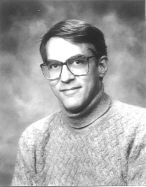
David G. Stork is Chief Scientist at the Ricoh California
Research Center and Head of its Machine Learning and Perception
Group as well as Consulting Associate Professor of Electrical
Engineering and Visiting Scholar in Psychology at Stanford University.
His fourth book, HAL's
Legacy: 2001's computer as dream and reality , was released
by MIT Press in October, 1996; he is also completing the second
edition of Pattern Classification and Scene Analysis with
R. O. Duda and P. E. Hart (Wiley). |
|