Dan Russell
Apple ATG
Sensemaking: What people do to understand their world
February 4, 1994
Making sense of complexity is a common activity. People must
continually make sense of devices, interfaces, and large amounts
of information. Sensemaking is the process of searching for a
representation and encoding data in that representation to answer
task-specific questions.
Different operations during sensemaking require differing
cognitive and external resources. Representations are chosen
and changed to reduce the cost of operations in a sensemaking
task. The power of these representational shifts and their effect
on resource use is generally under-appreciated. Subtle changes
in the costs of sensemaking steps can have a profound effect
on one's ability to make sense of the world. And, somewhat surprisingly,
sensemaking appears to follow a fairly consistent patterns across
different people, situations, domains, tools and methods.
Working from observations of people using computer systems
to make sense of complex information sets, we develop a model
of sensemaking and its cost structure. This lays the groundwork
for a deeper understanding of the opportunities for supporting
sensemaking with computers.
[ This research is joint work with Mark Stefik, Peter Pirolli
and Stu Card of Xerox PARC. ]
|
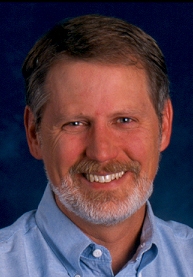
Daniel Russell, although born and raised in Los Angeles, has
fully recovered and is currently in the Advanced Technology Group
at Apple Computer. Currently he studies issues of intelligent
agent design and sensemaking. Prior to working at Apple, Dan
was a Member of the Research Staff at the Xerox PARC in the User
Interface Research group working on uses of information visualization
techniques. From 1984 through 1991 he led the "Instructional
Design Environment" project (with Richard Burton and Tom
Moran) to develop a practical computer-aided design and analysis
system for supporting ill-structured design tasks. In addition
to his work at PARC, he is an associate member of the Institute
for Research on Learning (IRL) in Palo Alto, an adjunct lecturer
on the Engineering and Computer Science faculty of the University
of Santa Clara and a lecturer in Computer Science at Stanford
University.
Dr. Russell received his B.S. in Information and Computer
Science from U.C. Irvine, and his M.S. and Ph.D. degrees in Computer
Science from the University of Rochester. While at Rochester,
he worked on the neuropsychology of laterality, coordinated motor
movements and computer vision. Prior to PARC, Dr. Russell worked
in the Xerox Webster Research Center gaining practical experience
in printing systems and computer architecture. |
|