
Interacting with and through personal robots
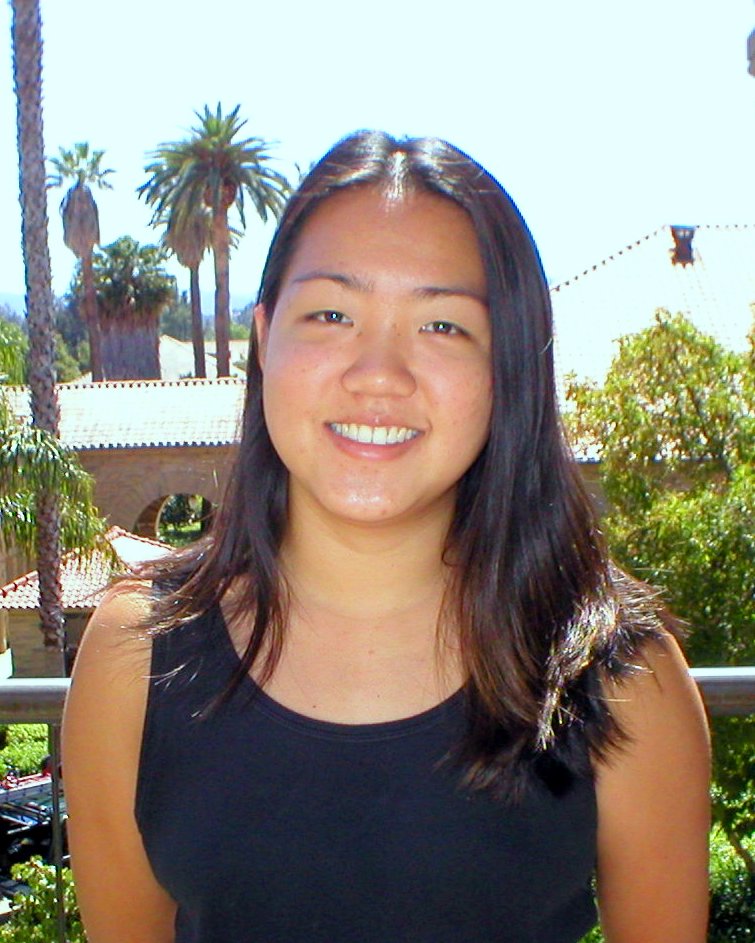 Leila Takayama, Human-Robot Interaction research scientist, Willow Garage
takayama willowgarage.com
Seminar on People, Computers, and Design
Stanford University November 19, 2010, 12:50pm, Gates B03
As robotic technologies become increasingly pervasive in homes, workplaces, and other everyday environments, there is an increasingly pressing need to understand how people make sense of personal robots, interact with them, and use them. While there is a wealth of lessons to be drawn from human-computer interaction to inform the design of personal robots, human-robot interaction also presents new research directions and design challenges that have yet to be explored in areas such as embodiment and agency.
Drawing from the philosophies of ubiquitous computing, I will frame two major design challenges in human-robot interaction: (1) making personal robots invisible-in-use and (2) engaging people in interactions with agentic personal robots. Fleshing out these challenges, I will present the results of several empirical studies that we have been conducting out in the field and back in the laboratory with a range of personal robots, including remote presence systems, entertainment robots, and human-size mobile manipulation platforms.

Leila Takayama is a research scientist at Willow Garage, where she studies human-robot interaction. Her interests lie in the intersections of ubiquitous computing, embodied cognition, and personal robotics. Her work focuses upon the behavioral, cognitive, and social implications of technologies that influence one's own sense of agency by becoming invisible-in-use. It also focuses upon how people make sense of and interact with agentic objects.
Prior to joining Willow Garage, Leila completed her PhD at Stanford University in the Department of Communication. She also holds a PhD minor in Psychology from Stanford, an MA in Communication from Stanford, and BAs in Cognitive Science and Psychology from the University of California, Berkeley. During her graduate studies, she also worked a research assistant at Palo Alto Research Center (PARC). Her PhD thesis, titled Throwing Voices: Investigating the Psychological Effects of the Spatial Location of Projects Voices, won the Nathan Maccoby dissertation award in 2008.
The talks are open to the public. They are in the Gates Building, Room B03 in the basement. The nearest public parking is in the structure at Campus Drive and Roth Way.
View this talk on line at CS547 on Stanford OnLine.
Titles and abstracts for previous years are available by year and by speaker.